
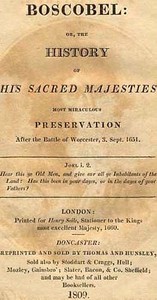
Boscobel by Thomas Blount
Thomas Blount's Boscobel is a unique piece of history. Published in 1660, it was written immediately after the events it describes, making it a primary source that still feels fresh and urgent. It's the detailed report of King Charles II's legendary escape after his final military defeat.
The Story
The book picks up right after the disastrous Battle of Worcester. Charles is a defeated king, a fugitive with Parliament's forces scouring the countryside for him. With his distinctive dark features making him easy to spot, his survival seems impossible. The narrative follows his frantic journey, guided by a handful of loyalists. His most famous hideout? The Boscobel Oak, where he spent a day hidden in the leaves while soldiers searched the grounds below. From there, he's passed from safe house to safe house, sometimes disguised as a woodcutter's servant. The tension is constant. Every creaking floorboard or glance from a stranger could mean capture and almost certain execution. The story culminates in his risky voyage to France, finally securing his freedom.
Why You Should Read It
What makes this book special is its perspective. Blount interviewed the king and the key helpers soon after the escape, so it has the feel of a debrief. You're not getting a polished, distant history lesson. You're getting the sweat, the fear, and the improvisation of the moment. It highlights the quiet bravery of the people who helped him—farmers, priests, and gentry—who had everything to lose. Their actions weren't about grand politics, but about loyalty and incredible personal risk. Reading it, you get a real sense of how fragile history can be; the future of the British monarchy literally hung on the silence of a few families and the thickness of some tree branches.
Final Verdict
This is a perfect read for anyone who loves true stories of narrow escapes and hidden history. If you enjoy biographies, historical adventures, or even survival tales, you'll find a lot to love here. It's also a great, accessible entry point into 17th-century England, showing you the human drama behind the big political events. Don't expect a novel with inner monologues—expect a straightforward, gripping report that proves reality can be more suspenseful than fiction. A fascinating glimpse into a king's greatest adventure, which happened when he had lost everything but his life.





Charles Ramirez
6 months agoAfter finishing this book, it manages to explain difficult concepts in plain English. One of the best books I've read this year.