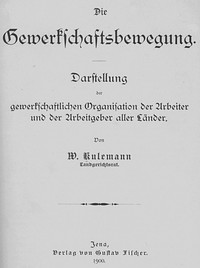
Die Gewerkschaftsbewegung by Wilhelm Kulemann
Wilhelm Kulemann's Die Gewerkschaftsbewegung is not a novel with a single plot, but it tells one of the most important stories of the modern era: how working people organized to change their world. Kulemann, writing in the late 19th and early 20th centuries, acts as both historian and witness. He traces the movement from its fragile beginnings—small groups of craftsmen meeting in secret—to its growth into a powerful political and social force. The 'characters' are the workers, the organizers, and the often-hostile governments and industrialists they faced.
The Story
Think of it as a biography of an idea. The book follows the birth and struggle of the trade union movement in Germany. It starts with the desperate conditions of the Industrial Revolution: long hours, child labor, and no safety nets. Kulemann shows how frustration boiled over into organization. He details the formation of the first unions, their early strikes (which often ended brutally), and their fight for legal recognition. It's a story of setbacks and small victories—winning a slightly shorter workday here, establishing a mutual aid fund there. The narrative builds as these scattered groups learn to unite, forming larger associations that could not be ignored by the powerful.
Why You Should Read It
This book makes history feel immediate. Because Kulemann was there, his account has a urgency and detail that later summaries can lack. You get a sense of the real stakes. This wasn't abstract policy; it was people risking everything for a livable life. Reading it today is a powerful reminder of how recently our current workplace norms were established through struggle. It also adds incredible context to modern discussions about labor, inequality, and collective power. It strips away the assumption that progress was inevitable and shows it was fought for, person by person.
Final Verdict
This is a must-read for anyone interested in social history, politics, or economics, but you don't need to be an academic to get a lot from it. It's perfect for the curious reader who wants to understand the roots of our modern world. Be prepared for a dense, detailed historical account—it's not light bedtime reading. But if you stick with it, you'll finish the book looking at your job, your paycheck, and your weekend in a completely new light. It's the foundational story behind the benefits we often forget to question.