
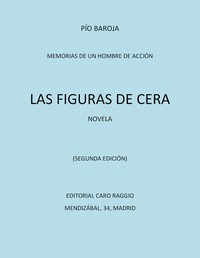
Las figuras de cera: novela by Pío Baroja
Pío Baroja's Las figuras de cera (Wax Figures) isn't a novel driven by a fast-paced plot. Instead, it's a deep dive into the restless mind of its protagonist, Martín Zalacaín. We follow Martín as he drifts through life in early 20th century Spain, from his youth in a provincial town to his experiences in Madrid and beyond. He's intelligent and sensitive, but he's crippled by a profound sense of alienation. He observes the people around him—his family, his acquaintances, society at large—and sees them not as full human beings, but as empty 'wax figures,' performing roles without any genuine feeling or thought.
The Story
Martín's journey is an internal one. He tries to fill the void inside him. He pursues a love affair with his cousin Ignacia, hoping passion will give his life meaning. He travels, seeking new experiences. He engages in long, philosophical debates with friends about art, society, and existence. But every avenue leads back to the same feeling of emptiness and disillusionment. The world feels staged, and he can't find his place in it. The novel's power comes from watching Martín bump against the walls of his own perception, constantly searching for something authentic in a reality he finds utterly false.
Why You Should Read It
What stunned me is how current Martín's crisis feels. Baroja captures that specific brand of youthful angst and intellectual despair that transcends its era. It's not a happy read, but it's a brutally honest one. You're not just reading about Martín; you're inside his head, feeling his frustration and his desperate, failed attempts to connect. Baroja's prose is direct and sharp, cutting through pretense to lay bare his character's soul. The novel doesn't offer easy answers, which is what makes it so compelling and real.
Final Verdict
This book is perfect for readers who love character-driven stories and don't mind a narrative that prioritizes psychological depth over action. If you've enjoyed the internal struggles in novels by Dostoevsky or the existential themes in Camus, you'll find a kindred spirit in Baroja. It's also a brilliant pick for anyone interested in the social and intellectual climate of Spain before its Civil War. Fair warning: it's a novel of ideas and moods, not of grand events. But if you're in the mood for a thoughtful, penetrating, and strangely relatable portrait of a search for meaning, Las figuras de cera is a forgotten gem worth uncovering.
Noah Martinez
1 year agoSimply put, the plot twists are genuinely surprising. Truly inspiring.
Melissa Miller
11 months agoFast paced, good book.




Edward Rodriguez
2 years agoTo be perfectly clear, the character development leaves a lasting impact. I will read more from this author.