About 59 minutes
Poems — Themes and Context
Science Fiction Utopias
13,352 recorded words. 0 minutes difference from this book's estimate.
View Gutenberg source #38594
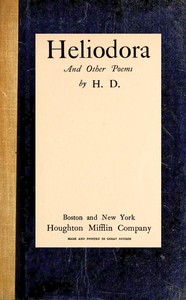
The source record for Heliodora, and Other Poems — Themes and Context measures this digital text at 13,498 words, 59 min estimated reading time, and 4 detected text sections.
The text analysis averages about 28.3 words per sentence, while the detected sections provide another way to judge how the source is divided.
Project Gutenberg metadata also associates the work with “American poetry -- 20th century,” connecting these edition facts with the source record’s subject description.
Explore this collection
These alternatives are selected using recorded categories and estimated reading time.
About 59 minutes
Science Fiction Utopias
13,352 recorded words. 0 minutes difference from this book's estimate.
View Gutenberg source #38594About 58 minutes
Science Fiction Utopias
13,201 recorded words. 1 minutes difference from this book's estimate.
View Gutenberg source #37752About 58 minutes
Science Fiction Utopias
13,216 recorded words. 1 minutes difference from this book's estimate.
View Gutenberg source #63622Search stored excerpts and compare books → Choose by your preferences →
Choices use stored catalog measurements. Estimates vary with reading speed. A shared category is a catalog label, not a claim that two books have the same argument or literary quality.
Search reads excerpt text stored with this catalog and links to its associated Gutenberg record. The connection is stored in the site database; this tool does not recheck that every excerpt is word-for-word identical to that external record. Excerpt search does not cover every chapter and does not verify historical publication dates.
Catalog snapshot checked: 2026-09-25. Coverage: 97 public books, 97 available source excerpts.
Calculated from edition completeness, EPUB availability, text structure and catalogue metadata. Not a user rating.
Total of 100 points, scaled to a 2.5-5.0 range. Editions with an empty description or a missing EPUB file are not scored.
Public-domain source text
The source text is kept in the dedicated reader, separate from this catalogue record and its commentary.
The first poem, 'Wash of Cold River,' immediately establishes the collection's governing aesthetic: a landscape of 'Ionian water, chill, snow-ribbed sand' and a desire to 'mould a clear and frigid statue.' This is not warm, narrative retelling of myth but a chiseled, almost mineral poetry. The speaker addresses an unnamed 'you'—perhaps a god, a lover, or the poem itself—with an intimacy that feels both reverent and remote.
Across the volume, H.D. draws on Greek epigrams, Sappho fragments, and figures like Helen, Cassandra, and Artemis. But she does not simply translate or retell; she compresses and transforms, letting a single image—a scarf unfolding, a cornel-tree's roots—carry emotional weight. The excerpts show a poet who treats ancient sources as living material, not museum pieces.
The opening poem, 'Wash of Cold River,' sets a paradox that runs through the book: frigid surfaces that contain intense feeling. The speaker wants to create 'a clear and frigid statue' for an 'inaccessible shrine,' yet the poem itself is offered as 'intimate thoughts and kind' reaching out to share 'the treasure of my mind.' This tension between cold form and warm address recurs. In 'Holy Satyr,' the speaker makes 'leaf-circlets and a crown of honey-flowers' for a goat-god, asking him to 'return our hymn, like echo fling a sweet song.' The poems often enact a ritual of offering—a gift of words or objects—to a deity or beloved who may or may not respond.
Later, 'Lais' commands Paphos to 'take the glass' and look into a mirror, as if the poem itself is a reflective surface. The reader is placed in the position of the goddess, asked to see and perhaps be seen. This dynamic of offering and withholding, of cold surface and burning core, is a key to reading the collection: attend to what is said, but also to what is left unsaid or held in reserve.
H.D. explicitly signals her use of ancient sources in the note preceding the poems: the four Sappho fragments are 're-worked freely,' the 'Odyssey' is a translation of the opening of Book 1, and 'Ion' translates part of a Euripidean chorus. But the excerpts show that even poems not labeled as translations engage with classical material in a fragmentary, allusive way. 'Orion Dead' is spoken by Artemis, who threatens to 'tear all the roots from the earth' in her grief. The voice is immediate, violent, and personal—far from a scholarly reconstruction.
In 'Charioteer,' the speaker vows to a 'god of beauty' to fashion a statue of his brother, staking 'all my soul on that beauty.' The poem builds through anaphora and mounting intensity, mirroring the sculptor's obsessive drive. These poems do not explain their myths; they inhabit them, often from oblique angles. A first-time reader should not worry about identifying every reference. The emotional logic—grief, desire, devotion—carries the work.
Several poems center on offerings made at the sea's edge. In 'Hermonax,' a fisherman presents a 'sea-gliding creature, this strange creature like a weed' to the gods Ino and Palemon. The poem is a speech of dedication, listing the god's attributes and the speaker's humble gift. Similarly, 'Thetis' and 'At Ithaca' evoke marine settings, while 'The Pool' and 'Moonrise' use water as a reflective, transformative element.
The sea in these poems is not a backdrop but an active presence—a source of both danger and gift. 'Lethe' imagines a death without cover or comfort, where only 'the roll of the full tide' covers the speaker 'without question, without kiss.' The finality is stark, yet the rhythm of the tide offers a kind of peace. These poems reward attention to their physical details: the 'salt foam,' the 'ivory layers' of bulbs, the 'cornel-trees uplift from the furrows.' H.D.'s Imagist training shows in her precise, tactile imagery.
Many poems are dramatic monologues spoken by mythological figures. 'Helen' presents the famous beauty in a moment of stillness, 'all Greece' hating her, yet she remains 'cool and indifferent.' 'Cassandra' speaks of being 'slain' by a goddess for a lover's 'chance smile.' The speaker in 'Nossis' invokes the Greek poetess, weaving her own voice with the ancient one. These are not passive heroines; they are agents of their own stories, even when trapped by fate.
In 'Orion Dead,' Artemis rages against the death of the hunter, her grief turning to violence against the natural world she once protected. The poem's power lies in its refusal to soften her fury. 'We Two' and 'Fragment Thirty-six' explore love and loss with similar directness. The reader should listen for the shifts in tone—from the cool control of 'Wash of Cold River' to the raw anguish of 'Orion Dead.' H.D. uses the mask of myth to speak with startling immediacy.
Reading Heliodora, and Other Poems is an experience of encountering ancient voices made new. The poems do not explain themselves; they ask the reader to feel the weight of a gesture, a color, a name. Approach each poem as a discrete object, attending to its images and rhythms. The collection rewards rereading: what seems cold may warm, what seems fragmentary may cohere. Let the poems' own logic—their offerings, their silences, their sudden intensities—guide you.
That rain-washed afternoon, H.D.’s Heliodora left me cold and restless, her marble goddesses more wound than warm. I wanted breath, not stone, and oddly found myself drifting toward Love's Old Sweet Song A sheaf of latter-day love-poems gathered from many sources — Themes and Context, where the passion feels less chiseled, more like a heartbeat you can nearly touch.
Answer a few questions and save a private reflection on this device.









