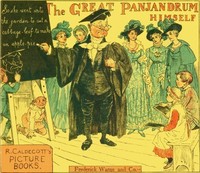
The Great Panjandrum Himself by Samuel Foote
Let's set the scene: London, 1779. Playwright Samuel Foote is feuding with a rival, a Duchess no less, who had him thrown in jail. How does a writer get even? He writes a play so deliberately, gloriously stupid that it makes his enemy's legal victory look like a joke. That play is The Great Panjandrum Himself.
The Story
There isn't a plot in the normal sense. Instead, Foote presents a 'rehearsal' where an actor struggles to perform a nonsensical tale written by the character standing in for Foote's rival. This tale is the now-famous 'nonsense' passage: a parade of absurd events involving twenty-five tailors, a goose, a hive of bees, and the titular 'Great Panjandrum' himself. The 'story' collapses under the weight of its own ridiculousness, which is exactly Foote's point. The real drama is watching the actor try to make sense of it, highlighting the emptiness of the original author's work and, by extension, the pettiness of the lawsuit against Foote.
Why You Should Read It
This isn't about narrative. It's about tone and attitude. Reading it, you can almost hear Foote's smirk. It's a brilliant middle finger disguised as a children's rhyme. The 'Great Panjandrum' passage has outlived the play's context and become a classic piece of literary nonsense, but knowing the backstory adds a delicious layer of spiteful genius. It shows how creativity can be a weapon for the powerless, and how sometimes the best way to win an argument is to make the other side look utterly foolish.
Final Verdict
Perfect for anyone who loves a good story behind the story, or fans of satire with real bite. If you enjoy the witty takedowns of someone like Oscar Wilde or the absurd humor of Monty Python, you'll appreciate Foote's ancient ancestor. It's a short, sharp, and historically fascinating read that proves some grudges are best settled with a brilliantly bad punchline.