About 133 minutes
Accolon of Gaul, with Other Poems — Themes and Context
Historical Psychological Social Fiction
30,582 recorded words. 3 minutes difference from this book's estimate.
View Gutenberg source #33686
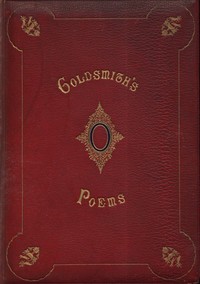
This digital edition of The Poems of Oliver Goldsmith — Edition Insights is described by source-level measurements including 31,250 words, 2 hr 16 min estimated reading time, and 42 detected text sections.
The text analysis averages about 24.7 words per sentence, while the detected sections provide another way to judge how the source is divided.
Project Gutenberg metadata also associates the work with “Poetry,” connecting these edition facts with the source record’s subject description.
Explore this collection
These alternatives are selected using recorded categories and estimated reading time.
About 133 minutes
Historical Psychological Social Fiction
30,582 recorded words. 3 minutes difference from this book's estimate.
View Gutenberg source #33686About 132 minutes
Historical Psychological Social Fiction
30,178 recorded words. 4 minutes difference from this book's estimate.
View Gutenberg source #56521About 148 minutes
Historical Psychological Social Fiction
33,923 recorded words. 12 minutes difference from this book's estimate.
View Gutenberg source #37649Search stored excerpts and compare books → Choose by your preferences →
Choices use stored catalog measurements. Estimates vary with reading speed. A shared category is a catalog label, not a claim that two books have the same argument or literary quality.
Search reads excerpt text stored with this catalog and links to its associated Gutenberg record. The connection is stored in the site database; this tool does not recheck that every excerpt is word-for-word identical to that external record. Excerpt search does not cover every chapter and does not verify historical publication dates.
Catalog snapshot checked: 2026-09-25. Coverage: 97 public books, 97 available source excerpts.
Calculated from edition completeness, EPUB availability, text structure and catalogue metadata. Not a user rating.
Total of 100 points, scaled to a 2.5-5.0 range. Editions with an empty description or a missing EPUB file are not scored.
Public-domain source text
The source text is kept in the dedicated reader, separate from this catalogue record and its commentary.
The 1877 edition of The Poems of Oliver Goldsmith, edited by Robert Aris Willmott and illustrated by Birket Foster and H. N. Humphreys, presents the poet's work within a biographical frame that emphasizes his Irish upbringing. The preface traces Goldsmith from his birth in County Longford through his education at Trinity College Dublin, noting his father as the model for the 'Preacher' in 'The Deserted Village.' This editorial lens shapes how readers encounter the poems, linking personal history to literary output.
The excerpts reveal a poet who moves between modes: the solemn choruses of 'The Captivity' contrast sharply with the comic epistolary banter of 'The Haunch of Venison.' The volume's catalog subject is simply 'Poetry,' but the editorial apparatus and illustrations suggest a curated portrait of the author as much as a collection of his verse.
Willmott's preface does not merely list dates; it constructs a narrative of Goldsmith's character through selected anecdotes. The story of nine-year-old Oliver dancing a hornpipe despite smallpox scars, then retorting with an epigram when compared to Aesop, is presented as evidence of 'ready humour.' The editor also dwells on Goldsmith's tutor, described as 'Savage,' and the poet's subsequent neglect of studies, creating a tension between natural talent and institutional failure.
These details are not neutral. By foregrounding Goldsmith's Irishness and his struggles with authority, the preface invites readers to see the poems as expressions of a particular temperament. The claim that Lissoy is the 'Auburn' of 'The Deserted Village' directly ties the poetry to the editor's biographical geography. Readers should note that this framing is a construction; the poems themselves do not require this backstory, but the edition insists on it.
The excerpts display Goldsmith's versatility. 'The Captivity,' an oratorio-like piece, employs recitative and choruses, with lines such as 'Cyrus comes, our wrongs redressing' that echo biblical prophecy. The language is formal and collective, using repetition ('Cyrus comes') to build ritualistic momentum. In contrast, 'The Haunch of Venison' is a comic epistle in rhyming couplets, full of self-deprecating asides and social satire.
The speaker of 'The Haunch' admits to telling 'a bounce' (a lie) about his connections, and the poem's plot—a gift of venison being snatched away by a pushy acquaintance—turns on the gap between pretension and reality. The voice is colloquial: 'But, hang it—to poets, who seldom can eat, / Your very good mutton's a very good treat.' This tonal shift within a single volume shows Goldsmith moving from public, elevated verse to private, humorous observation.
The title page credits three illustrators: Birket Foster and H. N. Humphreys, with engravings printed in colours by Edmund Evans. This places the volume in the tradition of Victorian gift books, where visual appeal complements the text. The preface mentions that Goldsmith's childhood home is 'a ruin, or, by this time, has quite disappeared,' a note that the illustrations might be expected to fill with idealized pastoral scenes.
However, the excerpts do not include the illustrations themselves, so their relationship to the poems must be inferred. The catalog lists the book under 'Poetry' alone, but the elaborate production—with multiple artists and a colour process—suggests an intended audience of collectors or admirers of illustrated literature. Readers should consider how the visual elements might reinforce or complicate the editorial emphasis on Goldsmith's life and landscapes.
This edition invites a dual reading: as a collection of eighteenth-century verse and as a Victorian artifact that shapes Goldsmith's legacy. The preface's anecdotes and the illustrations' pastoralism may color interpretation, but the poems themselves reward attention to their varied voices. Readers are encouraged to compare the biographical claims with the actual content of the works, noting where the editor's story aligns or diverges from the poetry's own concerns.
That rainy afternoon, Willmott’s preface kept returning to Goldsmith’s Irish childhood, the lilt beneath the elegies. The same wistfulness followed me into another slender volume, The Mother's Dream, and Other Poems — Reading Notes, where a mother’s quiet vigil felt like the desert village’s hearth still glowing. I closed both books before the rain stopped.
A brief reflection can help important ideas stay with you longer.









