About 47 minutes
Three Sunsets and Other Poems — Story, Setting & Ideas
Science Fiction Utopias
10,622 recorded words. 4 minutes difference from this book's estimate.
View Gutenberg source #35497
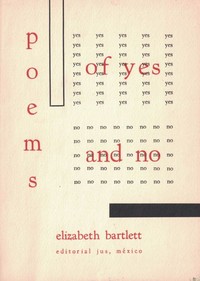
The catalog record for poems of yes and no — Key Ideas to Explore provides practical reading context through 9,741 words, 43 min estimated reading time, and 2 detected text sections.
The text analysis averages about 55.7 words per sentence, while the detected sections provide another way to judge how the source is divided.
Project Gutenberg metadata also associates the work with “American poetry -- 20th century,” connecting these edition facts with the source record’s subject description.
Explore this collection
These alternatives are selected using recorded categories and estimated reading time.
About 47 minutes
Science Fiction Utopias
10,622 recorded words. 4 minutes difference from this book's estimate.
View Gutenberg source #35497About 47 minutes
Science Fiction Utopias
10,693 recorded words. 4 minutes difference from this book's estimate.
View Gutenberg source #51904About 38 minutes
Science Fiction Utopias
8,727 recorded words. 5 minutes difference from this book's estimate.
View Gutenberg source #52546Search stored excerpts and compare books → Choose by your preferences →
Choices use stored catalog measurements. Estimates vary with reading speed. A shared category is a catalog label, not a claim that two books have the same argument or literary quality.
Search reads excerpt text stored with this catalog and links to its associated Gutenberg record. The connection is stored in the site database; this tool does not recheck that every excerpt is word-for-word identical to that external record. Excerpt search does not cover every chapter and does not verify historical publication dates.
Catalog snapshot checked: 2026-09-25. Coverage: 97 public books, 97 available source excerpts.
Calculated from edition completeness, EPUB availability, text structure and catalogue metadata. Not a user rating.
Total of 100 points, scaled to a 2.5-5.0 range. Editions with an empty description or a missing EPUB file are not scored.
Public-domain source text
The source text is kept in the dedicated reader, separate from this catalogue record and its commentary.
Elizabeth Bartlett's poems of yes and no (1952) announces its governing tension in the title: a collection organized around affirmation and refusal, each poem assigned to one of two poles. The table of contents itself becomes a map of this binary, with poems like "yes search the wild wind" and "no step softly" facing each other across the page. The structure invites readers to consider how these opposing impulses coexist within a single voice.
The excerpts reveal a poet attentive to natural cycles—seasons, weather, the movement of light—and to the body's placement within them. Images recur: wind as both force and metaphor, water as boundary and release, the horizon as a line between known and unknown. Bartlett's syntax often mirrors this restlessness, with lines that break against expectation and stanzas that shift abruptly between concrete observation and abstract reflection.
The collection's most visible structural feature is its division into two sections, "yes" and "no," each containing poems that explore the implications of that stance. The "yes" poems tend toward openness and movement: "search the wild wind" urges the reader to "buck the sky and cliffs apart," while "lesson on five fingers" turns inward, measuring what the self has learned. The "no" poems, by contrast, often begin with refusal or withdrawal: "step softly / I would remember" suggests a protective hesitation. Yet the boundary is not absolute. "only this," placed in the "no" section, ends with a qualified affirmation: "the older I grow / the more I feel, not know / the need of believing." The structure thus becomes a framework for ambivalence rather than dogma.
Across both sections, certain images appear with enough frequency to suggest a deliberate symbolic vocabulary. Wind is perhaps the most persistent: it appears in titles ("search the wild wind," "the wind and the rain") and within poems as a force that tests or transforms. In "search the wild wind," the speaker commands "reach the storm's heart / when the world is lost to sight." Water takes multiple forms—rain, tide, flood—often linked to emotional or psychological states. "in the wake of sleep" describes a "storm in the brain" that "whips the dull season high" and ends with "salt in mouth, sand in hair." The horizon, or the line between sky and earth, marks a point of aspiration or loss: "fame is rider pawing wind and cloud / fool to reach so far."
Bartlett's poems frequently shift between intimate, almost domestic settings and expansive natural landscapes. "alter ego" begins in a shadowed, interpersonal space—"always He was there / facing me where the others could not see"—and moves toward a scene of wounding and burial "beside the tree." "maturity" traces the growth of an internal companion through childhood play and seasonal change, then arrives at a forest of memory where "knowledge found us there / and taught us false from true." These transitions are often abrupt, signaled by a line break or a shift in verb tense. The effect is to collapse distance between the personal and the elemental, as if the speaker's inner weather and the outer world obey the same laws.
Several poems treat the body as a contested space where yes and no are negotiated. "cold wakening" opens with a shock of recognition: "for thirty years I lived a dream / until I woke up with a scream / and saw that all the things I'd dreamt / had vanished in the dawn's contempt." The speaker confronts a reflection that is not her own—"it was my mother's face alas." In "alter ego," the body becomes a wound that others tend to but cannot see: "they caught me in their arms / ripped the garments from my wound / and staunched the flow." The physical is never merely physical; it carries the weight of choice, memory, and identity. Even in the more lyrical passages, the body is present as a measure of time and change: "the fallen leaves now memories / of years grown thick as forest trees."
Readers approaching poems of yes and no will find a collection that rewards attention to its internal patterns. The binary structure is not a cage but a generative constraint, and the recurring images—wind, water, the horizon—accumulate meaning across the arc of the book. Because the excerpts represent only a portion of the whole, some connections may remain implicit; the full sequence of poems may reveal further symmetries or contradictions. Bartlett's voice is direct yet layered, and the poems invite rereading as much as first encounter.
There’s a particular loneliness in those yes/no poems—like standing at a window watching the wind decide for you. It made me think of Bartlett’s quieter hours, the ones she didn’t name. I found that same hush in 'Twixt Earth and Stars: Poems — Reading Companion, where light behaves like memory. Sometimes a book just sits beside you, warm and unhurried.
Your answers remain private and are stored only in this browser.









