About 188 minutes
The Cambridge Book of Poetry for Children Parts 1 and 2 — Inside the Classic
Adventure Picaresque Fiction
43,167 recorded words. 10 minutes difference from this book's estimate.
View Gutenberg source #50994
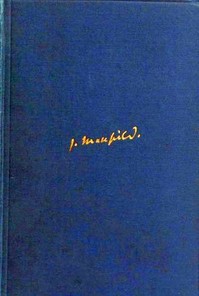
The source record for Selected Poems — Themes and Context measures this digital text at 40,838 words, 2 hr 58 min estimated reading time, and 8 detected text sections.
The text analysis averages about 22.0 words per sentence, while the detected sections provide another way to judge how the source is divided.
Project Gutenberg metadata also associates the work with “English poetry,” connecting these edition facts with the source record’s subject description.
Explore this collection
These alternatives are selected using recorded categories and estimated reading time.
About 188 minutes
Adventure Picaresque Fiction
43,167 recorded words. 10 minutes difference from this book's estimate.
View Gutenberg source #50994About 162 minutes
Adventure Picaresque Fiction
37,044 recorded words. 16 minutes difference from this book's estimate.
View Gutenberg source #36954About 196 minutes
Adventure Picaresque Fiction
44,941 recorded words. 18 minutes difference from this book's estimate.
View Gutenberg source #55342Search stored excerpts and compare books → Choose by your preferences →
Choices use stored catalog measurements. Estimates vary with reading speed. A shared category is a catalog label, not a claim that two books have the same argument or literary quality.
Search reads excerpt text stored with this catalog and links to its associated Gutenberg record. The connection is stored in the site database; this tool does not recheck that every excerpt is word-for-word identical to that external record. Excerpt search does not cover every chapter and does not verify historical publication dates.
Catalog snapshot checked: 2026-09-25. Coverage: 97 public books, 97 available source excerpts.
Calculated from edition completeness, EPUB availability, text structure and catalogue metadata. Not a user rating.
Total of 100 points, scaled to a 2.5-5.0 range. Editions with an empty description or a missing EPUB file are not scored.
Public-domain source text
The source text is kept in the dedicated reader, separate from this catalogue record and its commentary.
John Masefield's Selected Poems opens with the familiar rhythm of 'Sea-fever'—'I must go down to the seas again, to the lonely sea and the sky'—yet the collection quickly moves beyond nautical lyricism. The contents list shows a poet who, across eight source volumes, shifts from salt-water ballads to war poems, dramatic monologues, and sonnets grappling with cosmology. The earliest poems, from Salt Water Ballads (1902), evoke a sailor's world of 'tiny white houses' and 'steady Trade Winds blowing,' but later works such as 'The Hounds of Hell' and 'On Growing Old' turn inward, questioning the nature of consciousness and the body's decay. This selection, published by Heinemann in 1912, captures Masefield at a pivotal moment: still known for his popular sea verses, yet already reaching toward the metaphysical concerns that would define his later career.
The earliest poems in this selection, drawn from Salt Water Ballads, are built on sensory immediacy: the 'squeaking fiddle,' the 'yellow moon,' the 'long low croon' of the wind. They are songs of place and motion, anchored in the physical details of harbors, ships, and the 'cool and pleasant breeze.' Yet even here, a restlessness appears. 'Sea-fever' is less a celebration than a compulsion—'the call of the running tide' is 'wild' and 'clear,' but also lonely. By the time we reach the sonnets from Lollingdon Downs, the speaker has left the deck for the study. The poem beginning 'I could not sleep for thinking of the sky' abandons the concrete for the abstract: 'the unending sky, with all its million suns.' The same poet who once described the 'wheel’s kick' now asks 'How did the nothing come, how did these fires...first toss their hair?' The shift is not a break but an expansion; the same searching energy that drove the sailor outward now drives the thinker inward.
Throughout the collection, Masefield returns to the image of the body as both a fragile container and a limiting shell. In 'C. L. M.,' the phrase 'withering man, within whose folded shell / Lies yet the seed' suggests a duality: the body decays, but the spirit may quicken. Later, in the sonnet sequence, he writes of 'blood and brain' as 'imperfect tools, / Easily wrecked, soon worn.' The body is a 'ghost that wandering flesh immures'—a paradox where the soul is both housed and trapped. This tension is most stark in the lines 'Pour out its little blood or touch its brain, / The thing is helpless, gone, no longer known.' Here, the physical is all that is certain, yet it is also utterly fragile. Masefield does not resolve the conflict; he holds it in suspension, allowing the reader to feel the weight of both the material and the transcendent.
The selection includes poems from Philip the King and Gallipoli, works that engage with war and national loss. 'August, 1914' and 'Biography' appear alongside the more personal elegies like 'Sonnet on the Death of his Wife' and 'They closed her Eyes.' The public poems share a restrained tone; they do not glorify battle but dwell on endurance and memory. In 'The Messenger’s Speech,' the language is stark, almost reportorial. By contrast, the private elegies are more intimate, yet they too avoid sentimentality. 'They closed her Eyes' is a quiet, almost clinical observation. This juxtaposition of public and private grief suggests that Masefield saw no clear boundary between the two. The same voice that mourns a wife also mourns a generation. The collection does not offer comfort, but it does offer a kind of witness—a record of what it means to lose, whether at sea, in war, or in the slow erosion of time.
Readers approaching Selected Poems should not expect a single, unified voice. Masefield moves between registers—from the ballad-like repetition of 'Trade Winds' to the dense argument of the sonnets—and the collection rewards attention to these shifts. The poems are best read in the order presented, as the sequence itself creates a narrative: from outward motion to inward reflection, from the communal to the solitary. Pay particular attention to the recurring images of seeds, shells, and cells; they form a quiet thread linking the sea poems to the metaphysical ones. This is a book to be read slowly, with an ear for both the music and the argument.
I remember evenings when Masefield’s verses, all salt spray and starry unease, rested beside a quieter companion, the Poems — Themes and Context volume. They spoke to each other across the shelf, one asking of the sky, the other answering with rooted earth—a gentle, lifelong conversation about endurance and beauty, and I was lucky to overhear it. Poems — Themes and Context now holds that whisper for me.
Build a private reading journal entry for this title.









